Explore Supported Decision-Making

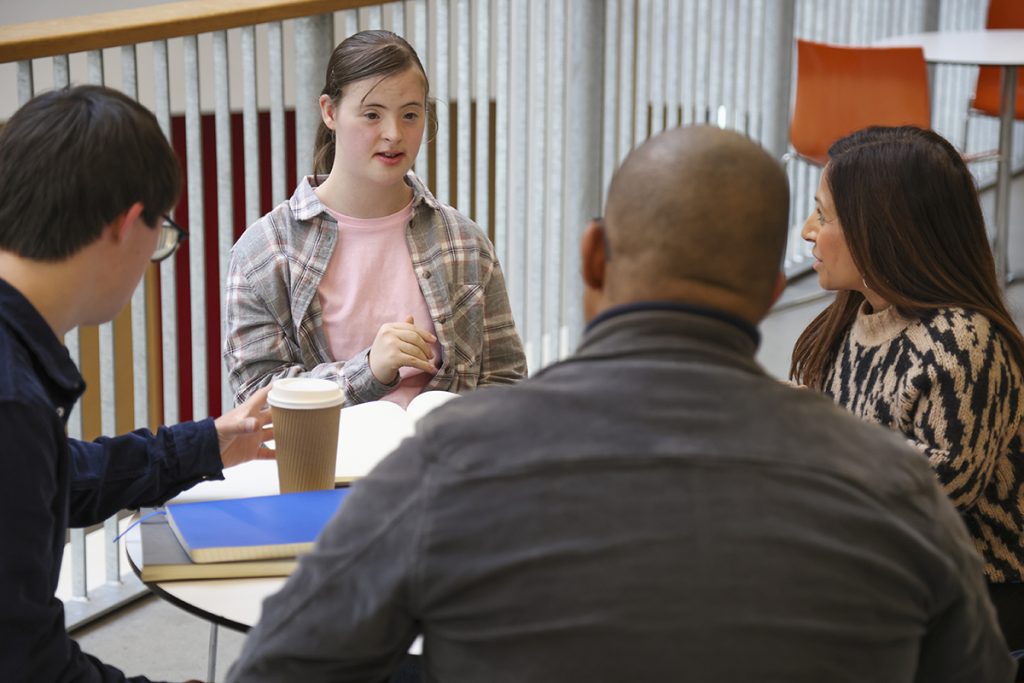
Group of smiling people with various disabilities sitting and talking at table in community center

Supported Decision-Making (SDM) is a way for people with disabilities to make their own choices and control their own lives, with help from people they trust. 

How does SDM differ from guardianship? Everyone has the right to make choices about their life to the maximum of their abilities.  Sometimes, people need a guardian to make decisions for them. That’s OK if it’s what you need! 

But, for people who can make their own decisions, either by themselves or when they get help, guardianship can be overly limiting or even harmful. That’s because guardianship takes away a person’s legal rights and gives them to someone else.
For people who can make their own decisions, SDM is a great way to go. With SDM, you don’t lose your rights. Instead, you choose people you trust—called supporters—to help you understand your choices, explore options, figure out what to do, and communicate your decisions.  Your supporters can help you:

  • Find and understand information. 
  • Figure out your options and think about what could happen for each.
  • Pick the decision that’s best for you.
  • Share your decisions with others if you that’s what you want to do.
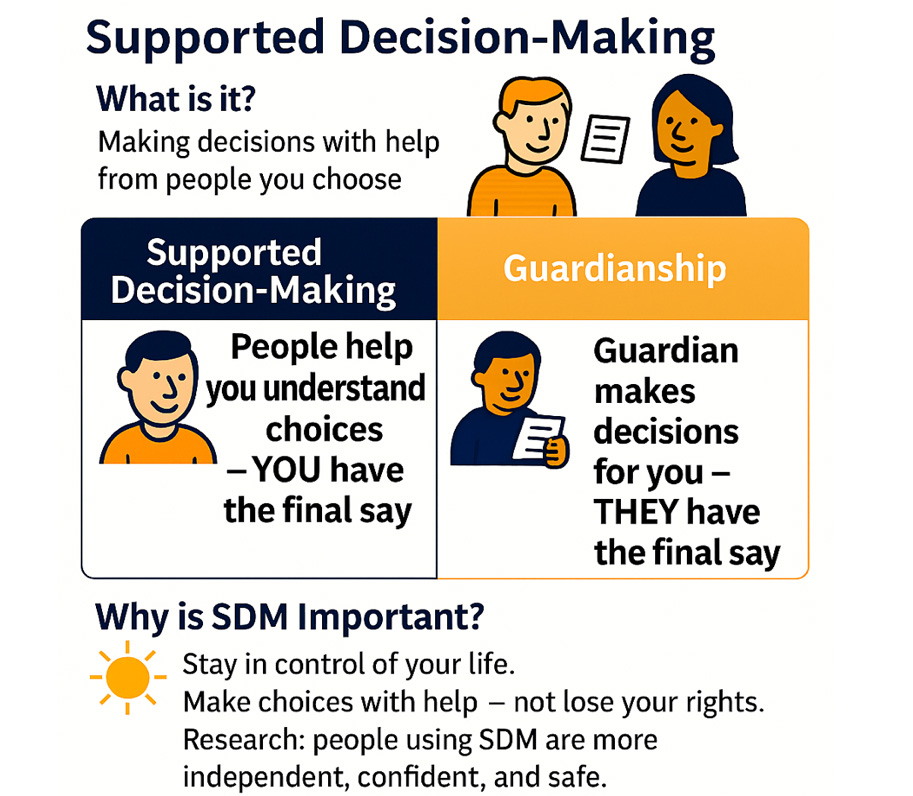
Infographic comparing Supported Decision-Making and Guardianship. SDM means people help you understand choices but you make the final decision. Guardianship means the guardian makes decisions for you. Also highlights that SDM helps people stay in control and make informed choices.

When you use SDM, you and your supporters develop a plan for when you want support, who will support you, and what kind of support you want. Then you’ll put that information into a Supported Decision-Making Agreement. This Agreement tells others that you want your supporters to help you and it’s OK to talk and work with them. But, always remember, YOU make the final decision. Your supporters help you, but you are in charge of what you decide and what you do! 

We All Use SDM

Think about what you do when you need to make a tough choice, or when you’re unsure about something. You might talk it over with a friend or family member. You might ask someone who knows more for advice or just want to think out loud. They help you understand your options and think through what’s best for you.

That’s Supported Decision-Making.

It’s not a program or a law – it’s something we all do. SDM just makes sure that everyone can make decisions in that same natural way. 

Decision-making is a skill, just like any other. The more you practice, the stronger and more confident you become. Think about something you’re good at. You probably weren’t great at it the first time — you learned through experience. It’s the same as SDM. With time and practice, it gets easier, and you can use it in more parts of your life.

Supported Decision-Making Values

SDM is based on simple, powerful values:

  • Respect – Everyone has the right to make their own choices.
  • Trust – Supporters listen, explain, and help, but don’t decide for you.
  • Learning – Everyone makes mistakes and that’s how we grow.
  • Inclusion – Everyone deserves the chance to participate fully in their community.

Why is SDM Important?

SDM is important because it empowers people to make their own decisions, be in control of their lives, and be full and equal members of society. We ALL have the right to do that. The Americans with Disabilities Act says, “physical or mental disabilities in no way diminish a person’s right to fully participate in all aspects of society.” (42 U.S.C. § 12101).

SDM isn’t just a good thing, it’s good FOR people with disabilities. Years of research shows that when people have more control and make more of their own decisions, they are:

  • More likely to be independent, employed, and active in their communities.
  • Better able to avoid abuse.
  • More confident and skilled in decision-making.

EVERYONE has the right to make choices, even if they need some help.

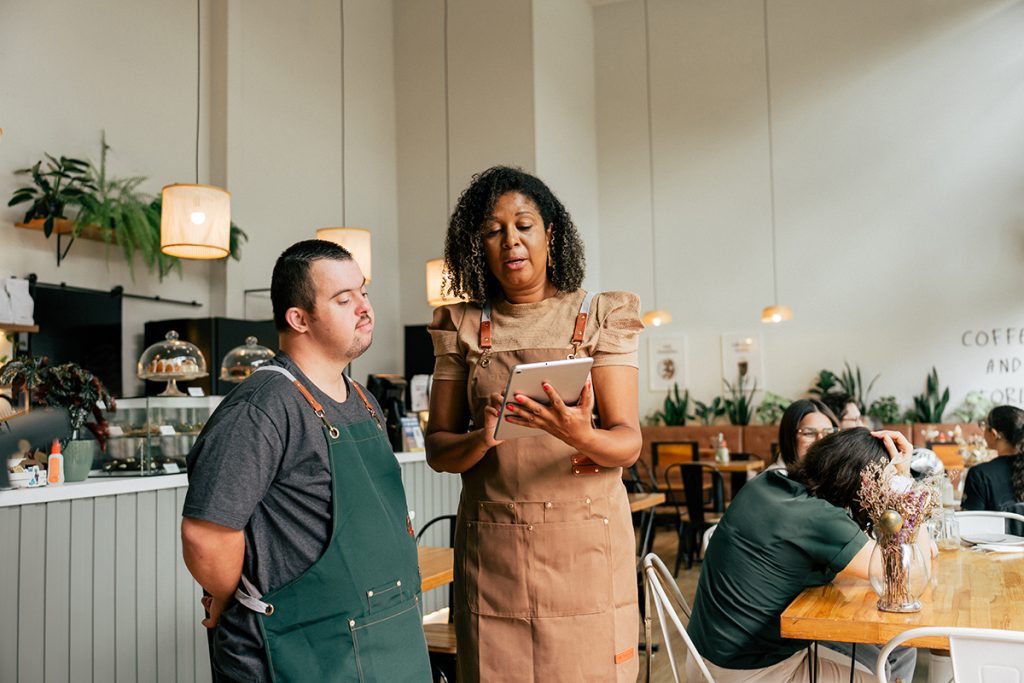
Cafe owner giving instructions to employee with Down syndrome

People have the right to make as many decisions as they can, even if they need help to do it. That’s what SDM is all about: finding the decisions you need help with, the help you want, and who can help you.

If you can use SDM, you should seriously consider it. Research shows that many people with disabilities, even those with the most significant disabilities, can use SDM to make at least some decisions.1  Most of the time, there’s no way to know if people can use SDM unless they try. That’s why organizations like the American Bar Association and National Guardianship Association recommend trying SDM before seeking guardianship, except in extreme situations.2

1. Peterson, A., Karlawish, J., & Largent, E. (2021). Supported decision-making with people at the margins of autonomy. The American Journal of Bioethics21(11) 4: https://www.tandfonline.com/doi/full/10.1080/15265161.2020.1863507

2. American Bar Association. (2017). ABA urges supported decision-making as a less restrictive alternative to guardianship. Bifocal: The Journal of the American Bar Association Commission on Law and Aging, 38(6). Retrieved from:  https://www.americanbar.org/groups/law_aging/publications/bifocal/vol_38/issue-6–august-2017-/aba-urges-supported-decision-making-as-less-restrictive-alternat.html;  National Guardianship Association (2017).  Position statement on guardianship, surrogate decision making, and supported decision making. Retrieved from: https://www.guardianship.org/wp-content/uploads/2017/07/SDM-Position-Statement-9-20-17.pdf

EVERYONE makes mistakes and that’s OK

Using SDM doesn’t mean that you’ll always make the “best” or “right” decision. Sometimes, you’ll make mistakes. Everyone does!  

No one can make the right choice 100% of the time. But that’s how we learn. People deserve dignity of responsibility: the respect and chance to make their own choices, even if they might make a mistake.   

Multi-ethnic group of students doing selfie outside of the school

It takes practice, but you CAN do it.

  • Think about something you’re good at. Were you always that good? Didn’t you have to practice to get better? 
  • Decision-making works the same way. It might feel hard when you first try SDM. You may need to find new ways to think about choices, work with new people, or figure out how to work better with your supporters. That’s OK. 
  • With practice, SDM gets easier and you’ll get better at it. Then you’ll be able to use SDM in more ways to make more decisions in more parts of your life!