Preparing for Your Supported Decision-Making Agreement

Multi generation business woman having video call with colleagues using computer app - Focus on mobile phone

Supported Decision-Making (SDM) is about staying in charge of your life — with the right kind of help when you want it.

Before you write a SDM Agreement, it helps to plan who will support you, how they’ll help, and the kinds of decisions you’d like supporters to help you with.


Steps for developing your SDM Agreement:

  1. When you want support – Think about the kinds of decisions that feel harder or where you like to “talk it out” first. Everyone needs help sometimes. Even if it doesn’t feel hard, maybe you just want to walk through your options and choices with someone you trust. This is all good! 
  2. How do you want to be supported – What kind of help do you want? Some people want information explained in plain language; others like to talk through pros and cons or get reminders. Also, the type of help you want may change, depending on the kind of decision you’re making. 
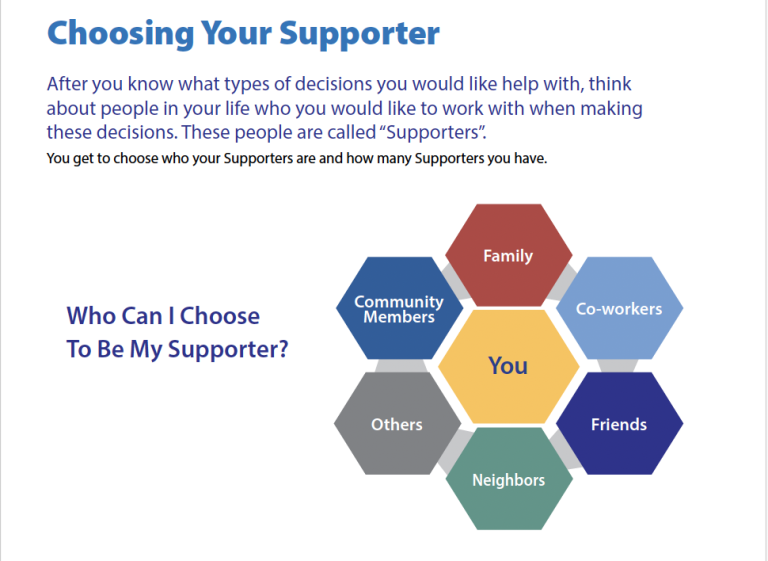
  3. Choosing potential supporters – Who are the people in your life that you most trust to help you? Consider family, friends, co-workers, or others who know you well.
  4. Developing your SDM Agreement – Write down your ideas about who will help, how they’ll help, and the kinds of decisions they will help with.

These will be the foundation of your written SDM Agreement.

List and organize important information – Click here for a written guide that may help you with organizing important information as you prepare to create your SDM Agreement.

When Do You Want Support?

Everyone needs help sometimes – that’s the reality! Think about parts of your life where having support could make decisions easier. 

You might want support when you are: 

  • Making medical or health care choices
  • Understanding school or work forms
  • Managing money or bills
  • Planning where to live
  • Figuring out transportation
  • Talking with agencies or services
  • Making social plans or travel decisions

Tip: You don’t have to get your plan done perfectly. Start with the areas that matter most right now — you can always update your plan later.

How Do You Want to Be Supported?

People get help in different ways. You might want someone to:

  • Explain information in plain language
  • Help you list the pros and cons of each option
  • Go with you to a meeting or appointment
  • Help you communicate your choice to others

Think about what kind of support helps you feel confident and respected. You can also decide how often you want help — only for big decisions, or more regularly. This can change, depending on the decision or other factors. It’s up to you!

How to Choose Your Supporters

Supporters are the people you trust to help you understand choices and make decisions.
They are there to help you — not to decide for you. 

Being a supporter means helping you think through decisions — not making them for you. When you talk with potential supporters about whether they’d like to be involved, they may want to know more about the role. You can help them by describing the roles of supporters in SDM:

Good supporters:

  • Listen first
  • Share clear information
  • Talk about options
  • Respect your final choice

Everyone needs help with decisions sometimes — that’s normal. Supported Decision-Making is about giving the right kind of help so you stay in charge of your life.

Some people cannot be supporters:

  • Your boss (unless they’re an immediate family member)
  • Your employee (unless they’re an immediate family member)
  • Someone paid to provide your care (unless they’re family)
  • Anyone who has a court order saying they can’t contact you

You can have one supporter or many – it’s your choice. The best supporters listen, explain things clearly, and respect your final say. 

Now you are ready to create your Supported Decision-Making Agreement, so let’s go!