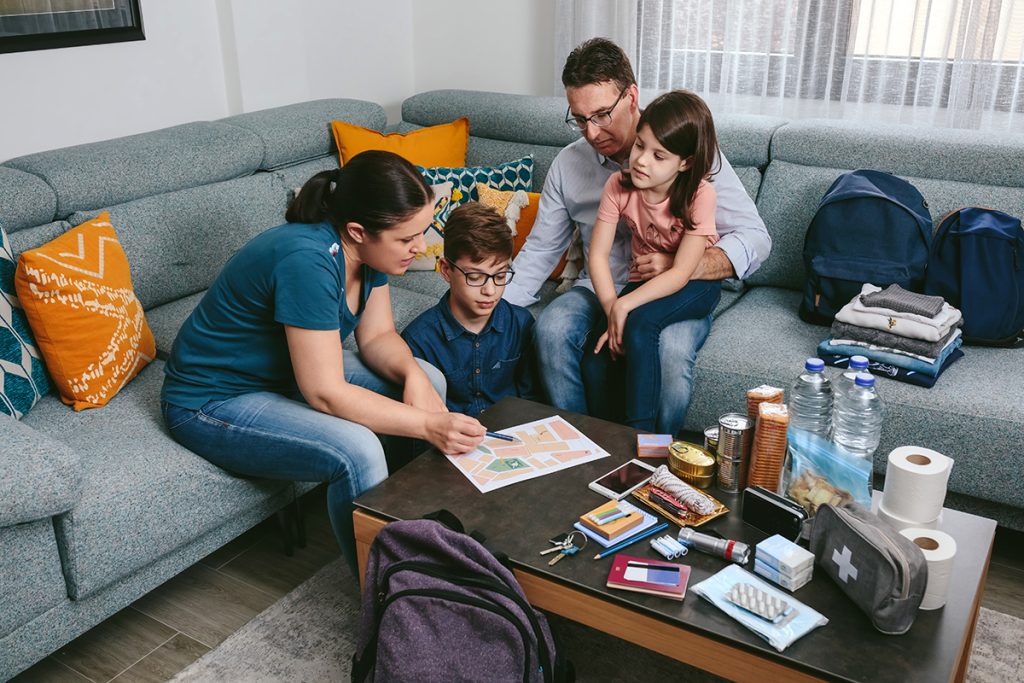
Using Supported Decision-Making in Your Life

Education
Maya is in high school and starting to think about life after graduation. Her IEP team is planning her transition services.
She meets with her supporters – her mom, a special education teacher, and a mentor. They help explain Maya’s possible next steps, like job options and vocation or training programs. Maya isn’t sure if she wants to go to college or get a job, so she asks her supporters to help walk her through the pros and cons of each. They even role-play different conversations to help her practice talking at her IEP meeting and planning the questions she’d like to ask.
With their help, Maya chooses short-term and long-term goals: she wants to get a job in childcare and take classes at the community college. Her IEP team updates her plan based on her decision. Maya knows she can change or adjust these goals any time she wants.
Transitioning From High School
High school graduation is a pivotal event for young people with disabilities. In Rhode Island, an individual with a disability can remain in high school up to the age of 22. During school years, students with disabilities think about, explore, and choose what they’ll do next. Supporters can help people think about and decide whether to continue in school, where they want to work, how they’ll access healthcare, and where they want to live.
James graduated from high school with a strong interest in science and technology. He wants to become a lab technician but doesn’t know where to start.
His supporters — including his mentor from school, his sister who works in healthcare, and a vocational counselor — meet with him to look at different training programs and talk about what kind of support he might need.
His sister helps break down the course requirements at a nearby technical college. His mentor helps him connect with someone already working in the field. His counselor helps him understand financial aid and disability accommodations.
James chooses to enroll in a two-year technology program. His supporters help him with the paperwork and create a study and support plan, but the decision — and the goal — are his.
Employment
Making Job Decisions with Support
Research shows that people with disabilities who work are healthier, have a better quality of life, and have lower medical expenses.2 People can use Supported Decision-Making to think about and choose their job goals, take part in job training, make on-the-job decisions, and work with job coaches and employers.
Lena has a TBI and is diagnosed with PTSD. She has been searching for a job for months. Ultimately, she receives two job offers — one at a retail store and one as a graphic design assistant at a local marketing company. Lena has a passion for digital art and wants to grow her skills in that area.
Her supporters — her mom, her friend who works in graphic design, and her older cousin — support her by:
- Reviewing the responsibilities and benefits of both jobs.
- Helping her think about long-term goals and career growth.
- Practicing interview follow-up questions and helping her communicate her needs.
After discussing her options, Lena chooses the design assistant role. It’s part-time for now but offers room to grow. Her team helps her request flexible hours and find transportation options and schedules. Lena’s excited — she’s working in the field she loves.
Steven is a high school graduate who has autism and does not want to go to college, postsecondary, or vocational school. His dream was to work at the local university, a walkable distance away. With the help of his parents and a job coach, he secured a part-time job in the kitchen, with the accommodation of having his job coach with him.
After 3 months, his supervisor at the university said it was time for Steven to “wean off” his job coach. While that was a good goal, Steven’s needs did not allow for this to happen yet if he wanted to remain successfully employed. He called together his supporters – his parents, his job coach, and his uncle and they discussed his options. This helped Steven understand he wasn’t alone, and this was a challenge anyone might encounter at work. Together they drafted a letter describing why Steven continued to need accommodations and then set a meeting with his boss to discuss. At the meeting, Steven’s boss understood his reasons for needing ongoing job coaching and fully agreed to continue. Steven, who likes his boss and loves his job, is thrilled with the outcome.
Transportation
Planning How to Get Around
Supported Decision-Making can help people with disabilities gain the skills and confidence they need to manage their transportation. People can work with their supporters to learn and navigate bus routes, schedule rides, or plan their travel routines. Here’s an example:
Marcus wanted to ride the city bus to work, but he had never done it before. One of his supporters, his friend Jack, helped him find the information about bus schedules and practice the route. Jack explained the bus schedule and helped Marcus with some questions about how the schedules worked and what to do if something went wrong, like what if Marcus missed a particular bus. They discussed various scenarios, mapped out Marcus’s particular schedule, and and Jack rode with Marcus the first few times. Marcus gained confidence in his ability to navigate the bus systems, including what to do if he missed a bus or some other mishap occurred. Now Marcus rides the bus on his own and is very proud of his travel independence.
Relationships
Supported Decision-Making can help people with disabilities build healthy and safe personal, social, and romantic relationships. Supporters can offer information, advice, and guidance about dating, friendships, personal and group dynamics, and ways to communicate with family, friends, and partners. Here’s an example:
Sofia wanted to meet more people her age. She talked with her supporters – her friend and a peer mentor – about safe ways to make friends. They helped her identify the activities she enjoyed like art and playing group games. Together they looked into a local art class and a community game night, and helped Sofia navigate the process of learning more and signing up for these activities. Now Sofia has a group of friends who enjoy similar activities and with whom she spends fun and valuable time each week. She feels more connected to her community and has a greater sense of fulfillment in her life.
Patrick, who attends classes at his local community college, is interested in dating. He speaks with his supporters about this and asks for their help. They meet with him to explore ways he may already be able to meet potential partners at school, with study groups or campus activities. They also help him explore various dating applications to see if there are any that appeal to him as a neurodivergent individual.
Patrick is also interested in learning more about dating safely, so with his supporters, they find a course on safe dating tips offered at the local Arc. He is not sure about feeling comfortable at this course, so one of his supporters offers to go with him to the first class. Patrick discovers it is a very relaxed conversation and he loves it. He feels like he has many options and can take his time to explore a potential new relationship with confidence.

Housing
Choosing Where to Live
Supported Decision-Making can help people with disabilities explore where and how they want to live and choose a place of their own. Supporters can help people think about and choose roommates, compare rent or other housing costs, and think about what they need to live independently. Here’s an example:
David accepted a job as an IT support assistant and wants to move closer to work. He’s also thinking about living more independently for the first time, which would mean leaving his parent’s home, a significant decision for him. His family supports him, although they are all a little anxious about the transition.
His supporters — his parents and a co-worker who recently moved — support him by:
- Thinking through the daily issues and tasks involved in living more independently, and taking care of his own needs.
- Helping him connect with a local organization that provides resources, checklists, and other information to young people planning a move out of their family home.
- Helping him compare housing options based on commute, safety, and cost.
- Reviewing lease agreements and setting up a budget.
- Helping him think through what supports he might want (like occasional home visits, apps for medication reminders, local transportation options, etc.)
David picks an apartment in a building that offers supported living services from a local provider. He’s proud of his choice and ready for this next step.
Healthcare
Working With Doctors to Make Health Decisions
Supported Decision-Making can empower people with disabilities to be involved in and take charge of their own healthcare. Supporters can help people choose their doctors, get ready for appointments, communicate with their health care providers, and understand, think about, and choose their treatment and medication options.
Here’s an example:
Ana was recently diagnosed with diabetes and must decide between two different treatment plans. She brings her supporters — her sister and her friend who also has diabetes — to her care planning meeting.
They support her by:
- Explaining complicated medical terms in plain language.
- Sharing what their experiences have been with each treatment.
- Helping Ana make a list of questions for the doctor.
After meeting with her doctor, getting all her questions answered, and reviewing her options, Ana chooses the plan that best fits her lifestyle and energy levels. Her team assists her to set up a schedule of medication reminders and follow-up appointments.
Jose has just moved into his own supported apartment and has always relied on his parents to choose his doctors and make medical appointments for him. He wants to take these tasks on himself and calls a meeting of his supporters to discuss. Since he is relying on public transportation in his new apartment, and his old doctor is not on a bus line, he needs a new doctor. So, his supporters help him put together a list of possible providers that are accessible to bus routes. Jose tells his supporters he does not want to travel more than thirty minutes to see his doctor.
After putting together a list of 10 potential doctors his supporters help Jose narrow the possibilities down to two final options by creating a pros and cons list. One of his supporters goes with him to visit both offices, and Jose feels very comfortable with the location and feel of one of the offices. Jose is very happy he has selected his own doctor and can make his own arrangements to see him as well as travel on his own to appointments.
While these are some of the most common issue that are included in SDM Agreements,they are not the only ones. A SDM Agreement, as long as it includes the information and sections that the RI law requires, can have as much detail and address any issue you want!
1. Wehmeyer, M. L., & Palmer, S. B. (2003). Adult Outcomes for Students with Cognitive Disabilities Three-Years After High School: The Impact of Self-Determination. Education and Training in Developmental Disabilities, 38(2), 131–144. hyperLink: https://doi.org/10.1177/215416470303800202
2. Hall, J. P., Kurth, N. K., & Hunt, S. L. (2013). Employment as a health determinant for working-age, dually-eligible people with disabilities. Disability and Health Journal, 6(2), 100-106. hyperLink: https://www.sciencedirect.com/science/article/abs/pii/S1936657412001264?via%3Dihub